How Do You Keep a Car Battery Alive in Winter?
Editorial Team · 5 min read
Last Updated: 10 November 2026
Quick Summary
To keep a car battery alive in winter, test it before the cold arrives, take a longer drive at least weekly, and switch off lights and heated seats before starting. Cold cuts a battery's power while thickening engine oil, so a weak battery often fails on the coldest mornings.
- A fully charged car battery reads around 12.6 volts with the engine and accessories off.
- A reading below 12 volts suggests the battery needs charging or replacing.
- Journeys under about 20 minutes rarely replenish much charge.
- After a jump start, drive for at least 30 minutes of steady driving.
- Park under cover where possible and clean corroded terminals.
Table of Contents
- Why Cold Weather Drains Car Batteries
- How to Test a Car Battery at Home
- How to Charge a Car Battery and How Long to Drive to Charge It
- Frequently Asked Questions
Cold weather is the biggest threat to a 12-volt car battery, and most failures happen on the coldest mornings. Batteries that start fine in October can refuse to turn the engine in January.
Why Cold Weather Drains Car Batteries
Cold cuts a battery's power output while thickening engine oil, so the starter needs more current from a weaker battery.
A battery already weak in autumn often fails first when temperatures drop, as heating, lights and wipers draw power needed for starting.
- Cold thickens oil, so starting takes more power
- Slower chemical reactions mean less available power
- Short trips never fully recharge the battery
- Old or damaged batteries fail first
How to Test a Car Battery at Home
A multimeter gives a rough health check. With the engine and accessories off, a fully charged battery reads around 12.6 volts; below 12 volts suggests it needs charging or replacing.
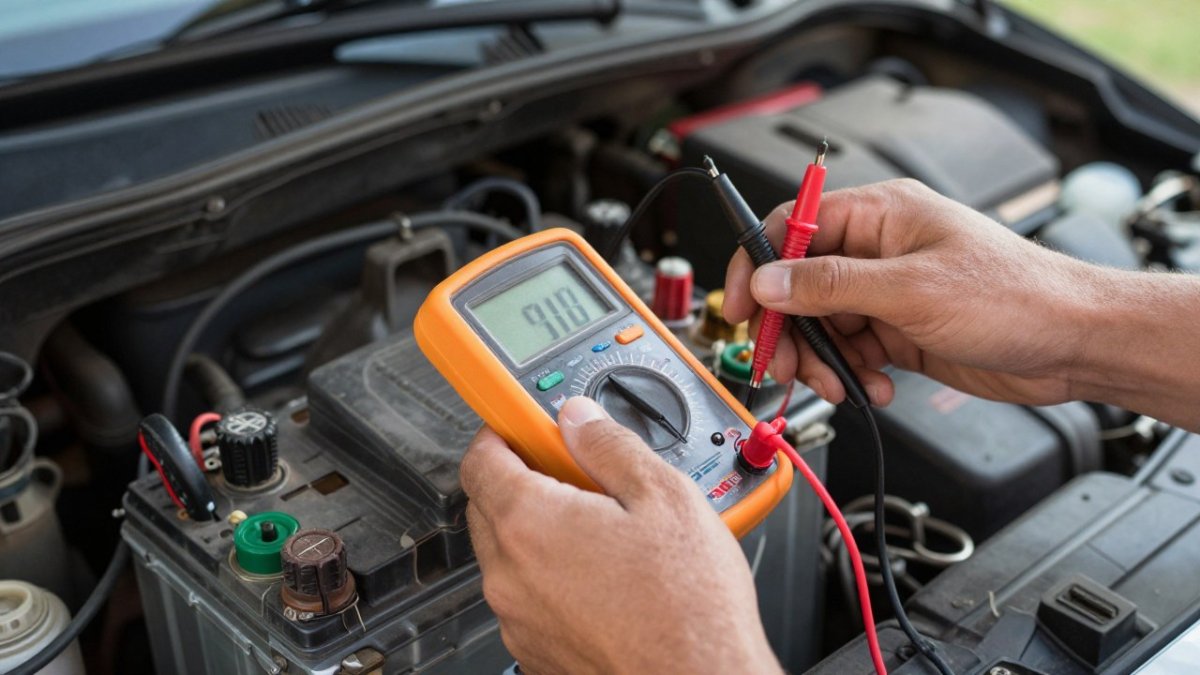
Retest after a drive, since a reading straight after charging can look better than it is. If the battery is slow to start, clicks, or goes flat repeatedly, a professional load test gives a clearer answer. Licence to Chill offers mobile 12V battery testing at your home or workplace, with printed results you can share with a repairer.
How to Charge a Car Battery and How Long to Drive to Charge It
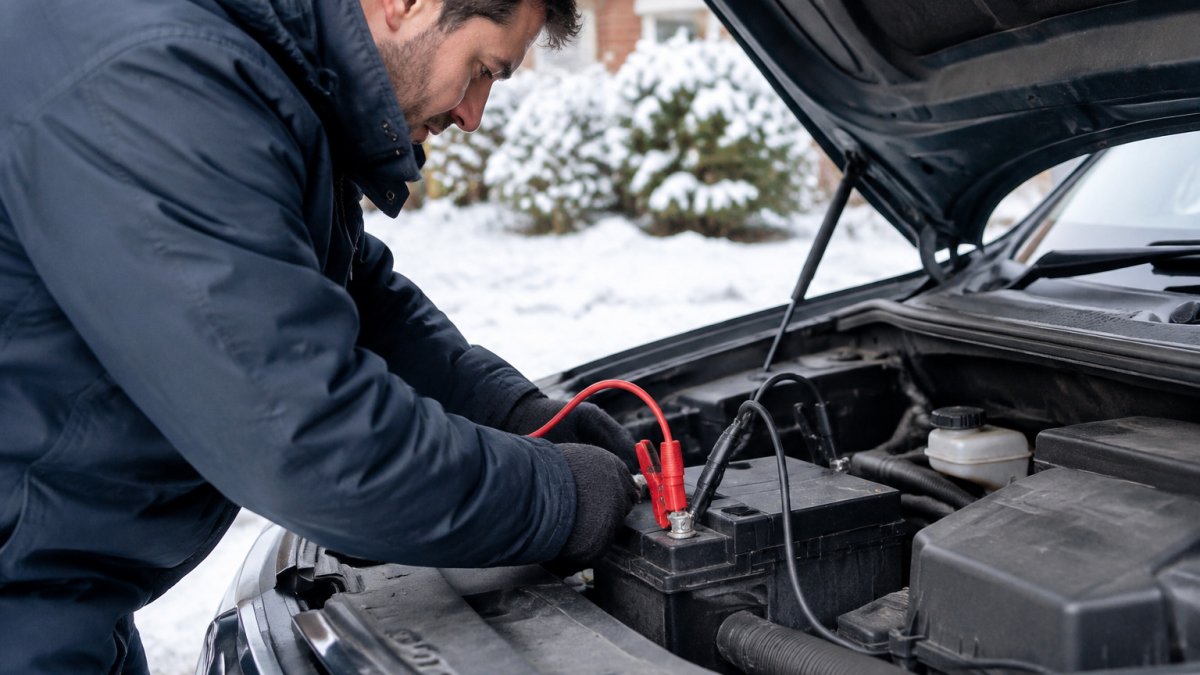
To recharge a flat battery, use a dedicated charger set to the correct voltage. Connect positive first, then negative, and keep the charger clear of moving engine parts. Journeys under about 20 minutes rarely replenish much charge, so aim for at least 30 minutes of steady driving after a jump start.
- Park under cover where possible
- Take a longer drive at least weekly
- Switch off lights and heated seats before starting
- Clean corroded terminals and check connections
If your battery keeps going flat, arrange a mobile battery check with Licence to Chill before the next cold snap. Mobile visits around York can also cover battery testing and checks with suitability and travel agreed first.
The table below summarises the key charging and maintenance figures from this section.
| Item | Value | Note |
|---|---|---|
| Fully charged reading | 12.6 volts | Engine and accessories off |
| Low reading | Below 12 volts | Needs charging or replacing |
| Short journey | Under 20 minutes | Rarely replenishes much charge |
| Recommended drive after jump start | At least 30 minutes | Steady driving |
| Longer drive frequency | At least weekly | Helps keep battery charged |
| Before starting | Switch off lights and heated seats | Reduces drain |
Frequently Asked Questions
Why do car batteries go flat more often in cold weather?
Cold slows the chemical reaction inside a lead-acid battery, so it delivers less power just when the engine needs more to turn over. Heating, lights, demisters and heated seats add load at the same time. A battery that is already a few years old or only partly charged is most likely to fail on a frosty morning. Parking under cover and keeping the battery charged helps reduce the risk.
How long should I drive to charge a car battery?
A battery that has been drained by a short start usually needs around 30 minutes of driving at a steady speed to recover. Several short trips in a row often leave it undercharged, because the starter draws far more than the alternator replaces in a few minutes. If the car has been left for a while, a dedicated charger is the more reliable option. Regular longer drives matter more than the exact figure.
How can I check my car battery at home?
Start with the engine off and read the voltage with a multimeter across the terminals. A reading of about 12.6 volts or higher suggests a healthy, fully charged battery, while readings nearer 12.0 volts suggest it is low. Check that the terminals are clean and tight first. A reading taken straight after driving can look misleadingly high, so let the car rest for a few hours before testing.
