7 Symptoms of a Blocked Cabin Air Filter to Watch For
Editorial Team · 5 min read
Last Updated: 15 November 2026
Quick Summary
A blocked cabin filter usually shows up as weak airflow from the vents, even on high, along with musty or dusty smells when the fan starts. A restricted filter tends to reduce flow across all vent positions, while a single dead vent points to a different fault. Checking the filter first is quick and often costs nothing.
- Weak airflow across all vent positions is a common sign of a restricted filter.
- A single dead vent or mode door fault affects one outlet only, not the whole system.
- A musty smell strongest at fan start-up can point to a clogged, damp filter.
- Dust blowing from the vents may mean the filter is saturated or incorrectly seated.
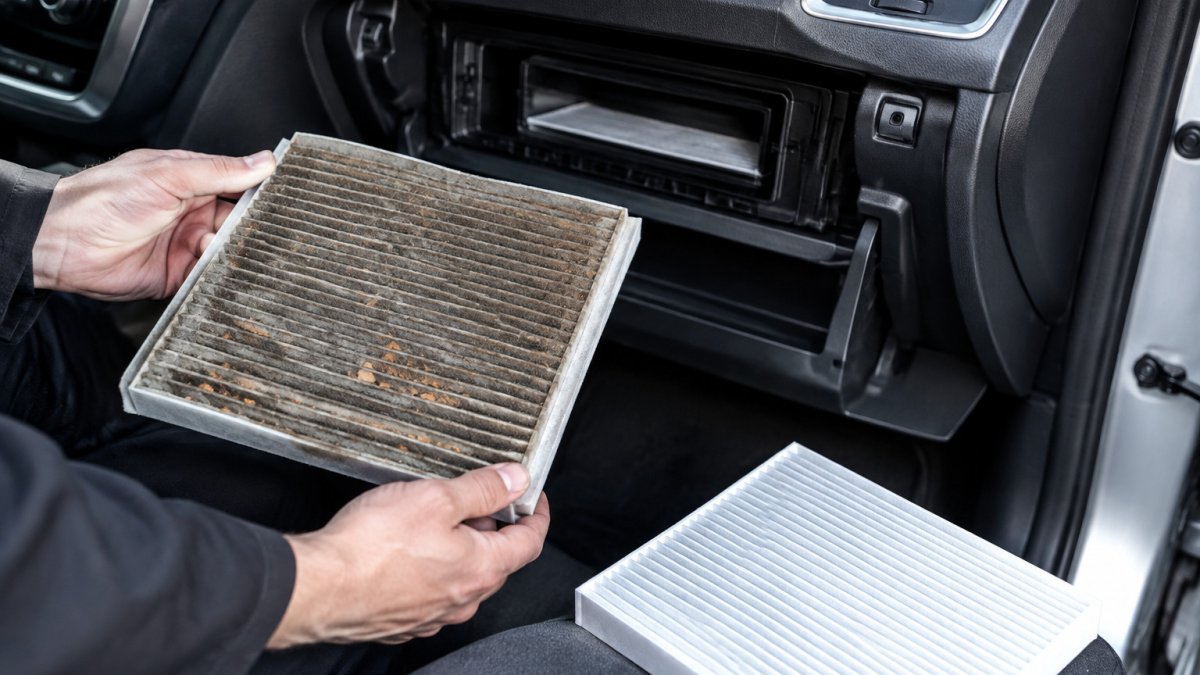
- Remove the filter and hold it to the light; grey, black or debris-filled means replace it.
Table of Contents
- Weak Airflow and Reduced Vent Performance
- Musty Smells and Dust from the Vents
- How to Check a Cabin Air Filter Safely
- Frequently Asked Questions
Weak Airflow and Reduced Vent Performance
A blocked cabin air filter is one of the most common reasons vents feel weak: as dust, leaves, pollen and soot pack into the pleats, the fan pulls less air at the same speed. Watch for weak airflow even on high, feeble demist vents, a strained fan, or slow temperature changes.
A restricted filter usually reduces flow across all vent positions, whereas a single dead vent or mode door fault affects one outlet only. If you are unsure whether warm air means a regas or something else, understand the checks and refrigerants involved first. If airflow is weak but the fan is silent on every speed, suspect the blower motor resistor or motor; if airflow is fine but the air never gets cold, suspect refrigerant charge, a compressor or blend door issue, not filtration. Where weak airflow has been confirmed, you can arrange a mobile air con regas at home or work.
Many drivers assume they need a regas when the real issue is a dirty filter, and checking the filter first is quick and often costs nothing. UK government guidance on vehicle maintenance
Musty Smells and Dust from the Vents
A clogged filter traps moisture and organic matter, leaf fragments, pollen, insect debris and road film, which in damp conditions can support microbial growth, producing a musty, mouldy or sour smell strongest when the fan first starts or after parking in humid weather. Dust or grit blowing from the vents means the filter may be saturated or incorrectly seated, letting unfiltered air bypass the element.
A standard particle filter captures dust, pollen and larger debris but does little for odours; an activated-carbon filter adds a layer that adsorbs many exhaust-type smells. Neither type cures a damp evaporator or removes every odour.
Smells can also come from the evaporator case, a blocked air-conditioning drain or debris in the scuttle panel: a smell that fades after the fan runs a few minutes points to surface growth on the evaporator, while one present from the first second and smelling of dust or leaves points to the filter. The filter reduces airborne particles entering the cabin, but it is not a medical device and a smell is not proof of mould. Still, a dirty filter is a good place to start, and replacing it is inexpensive compared with diagnosing an evaporator issue.
How to Check a Cabin Air Filter Safely
Checking the filter is a simple job for most cars: switch the engine off first and check your owner's manual for the location of the cabin filter. Open the glovebox and remove any stops so it swings down fully, find the filter cover (usually on the side or back of the glovebox housing), release the clips or tabs and slide the cover out, then pull the filter out and hold it up to the light, if it is grey, black or full of debris, it likely needs replacing.
Replace it with the correct part for your car: standard filters trap dust and pollen, while activated-carbon filters also help with smells and fumes. If unsure, ask a professional to check. Do not run the fan on high with the filter removed, as debris can enter the system and damage the blower motor.
If weak airflow or smells continue after replacing the filter, the cause may be elsewhere. At Licence to Chill, our IMI-qualified team can carry out a mobile cooling performance check and printed report at your home or work. 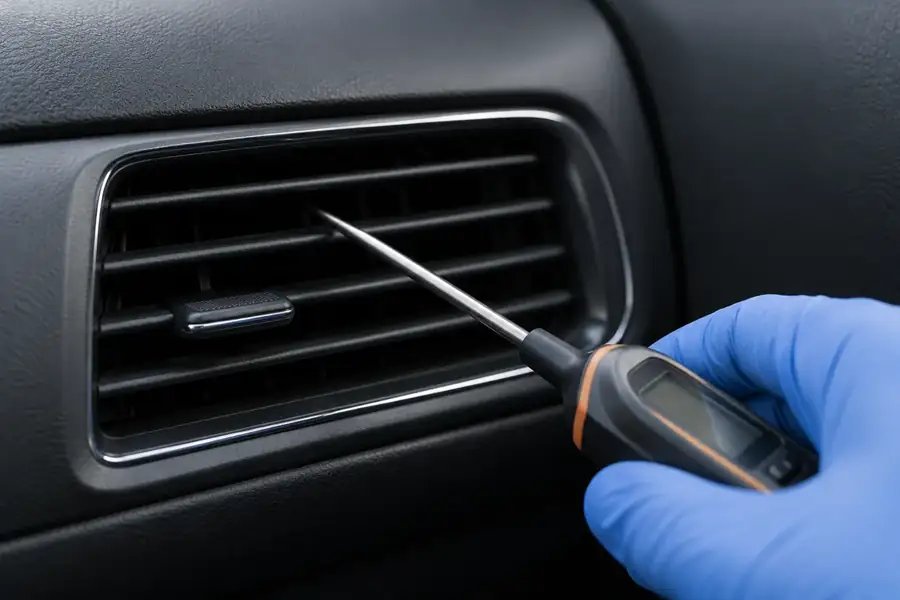
Frequently Asked Questions
What are the symptoms of a blocked cabin air filter?
The most common signs are weaker airflow from the vents, a musty or dusty smell when the ventilation is switched on, reduced heater or air conditioning performance, and windows that take longer to demist. Some drivers also notice dust or small debris coming out of the vents. These symptoms can overlap with other faults, so it is worth checking the filter first and then getting a proper diagnostic if nothing changes after replacement.
Can a blocked cabin air filter affect the heater or demister?
Yes. A restricted filter limits how much air passes through the heating and ventilation system, so the heater may feel less warm and the windscreen may take longer to clear. Because demisting depends on airflow across the glass, a dirty filter can slow the process noticeably, especially in damp weather when the windows fog up quickly.
How often should a cabin air filter be changed?
The right replacement interval depends on how you drive, so check your handbook for the recommended schedule. Vehicles used on dusty roads, in heavy traffic or near fields often need more frequent changes. Check your handbook for the recommended interval, and inspect the filter at each service if you notice any of the symptoms described above.
